


Try our free finance tools for quick calculations & smart decision — Explore Tools
Table of Contents
Introduction
The tech world woke up to absolutely stunning news this week when Perplexity AI dropped a bombshell announcement that sent shockwaves through Silicon Valley. The company has made an unprecedented $34.5 billion offer to acquire Google Chrome, marking what could be the most audacious tech acquisition attempt in recent history.
This isn’t just another routine business deal – this is a move that has left even the most seasoned industry insiders scratching their heads in disbelief. The sheer boldness of a relatively young AI company taking on Google’s crown jewel browser has created a buzz that’s impossible to ignore. When news of the bid first broke, it felt almost surreal. Here’s a company that many people are still getting familiar with, suddenly positioning itself to potentially control the browsing experience of billions of users worldwide.
What makes this story even more fascinating is the timing. As regulatory pressures mount against big tech companies and the AI revolution continues to reshape how people interact with information online, Perplexity bold move couldn’t be more strategically positioned. The question everyone’s asking isn’t just whether Google will accept this offer, but what this means for the future of how we browse, search, and consume information on the internet.
The Bombshell Announcement
A. Official Bid Details
The details surrounding Perplexity‘s offer are as striking as the announcement itself. The $34.5 billion valuation represents a massive premium that demonstrates just how seriously the company views this acquisition opportunity. Industry analysts are still trying to wrap their heads around where a company like Perplexity would source this level of funding, though rumors suggest a combination of venture capital backing and strategic partnerships could be fueling this ambitious play.
The official announcement came through carefully coordinated press releases that emphasized Perplexity’s vision for transforming the browsing experience. Rather than simply acquiring Chrome as-is, the company has outlined plans for deep integration of their advanced AI technologies, promising users an entirely new way to interact with web content.
What’s particularly interesting about the bid structure is how it positions Chrome not just as a browser acquisition, but as a platform for delivering next-generation AI-powered internet experiences. The $34.5 billion figure isn’t just paying for existing market share – it’s an investment in reshaping how people discover and consume information online.

B. Market Reaction
The immediate aftermath of the announcement created ripple effects across financial markets that nobody could have predicted. Tech stocks experienced unusual volatility as investors tried to process the implications of this unexpected move. Google’s parent company, Alphabet, saw its shares fluctuate as traders weighed the potential benefits of such a substantial cash infusion against the strategic implications of losing control over Chrome.
Meanwhile, other browser companies found themselves suddenly in the spotlight as analysts began speculating about potential domino effects throughout the industry. The reaction from Wall Street has been a fascinating mix of skepticism and cautious optimism, with many questioning whether Perplexity can realistically execute on such an ambitious acquisition while others see it as a brilliant strategic maneuver.
Why This Bid Makes Strategic Sense
A. Perplexity’s AI Search Ambitions
To understand why this acquisition attempt makes sense, you need to look at where Perplexity AI has been positioning itself in the competitive landscape. The company has built its reputation on delivering AI-powered search experiences that provide more contextual, conversational responses compared to traditional search engines. Their current market position, while still growing, represents a fraction of Google’s dominance, but that’s precisely what makes Chrome so attractive.
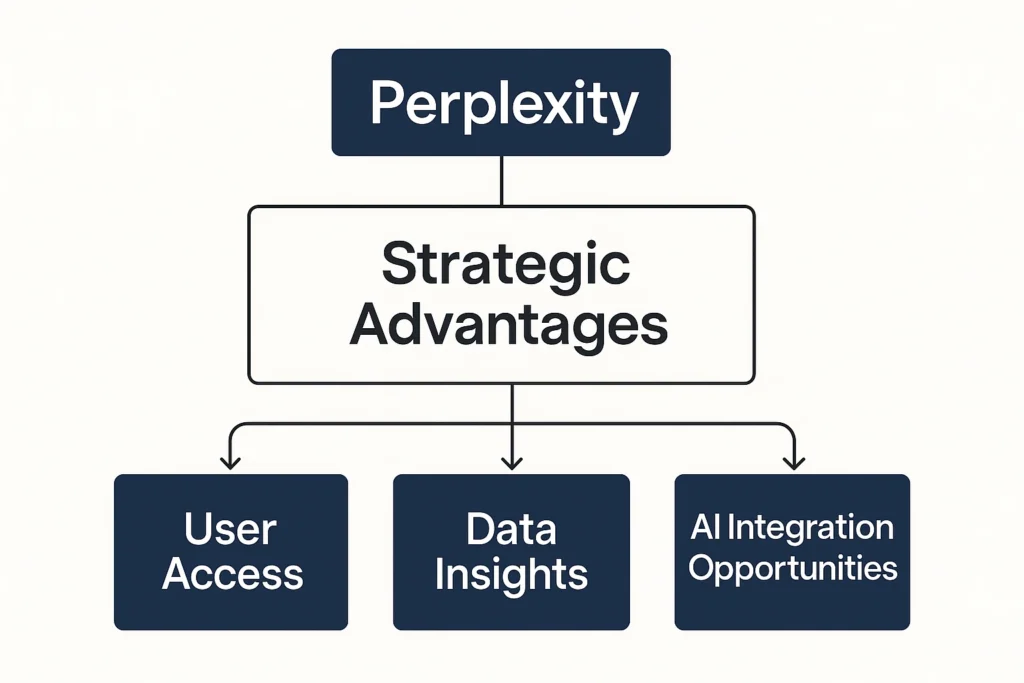
By acquiring Google Chrome, Perplexity would instantly gain access to the primary gateway that billions of users rely on to access the internet. Instead of trying to convince people to change their search habits, they’d be meeting users exactly where they already are – in their browser. This represents a shortcut to market penetration that would otherwise take decades to achieve organically.
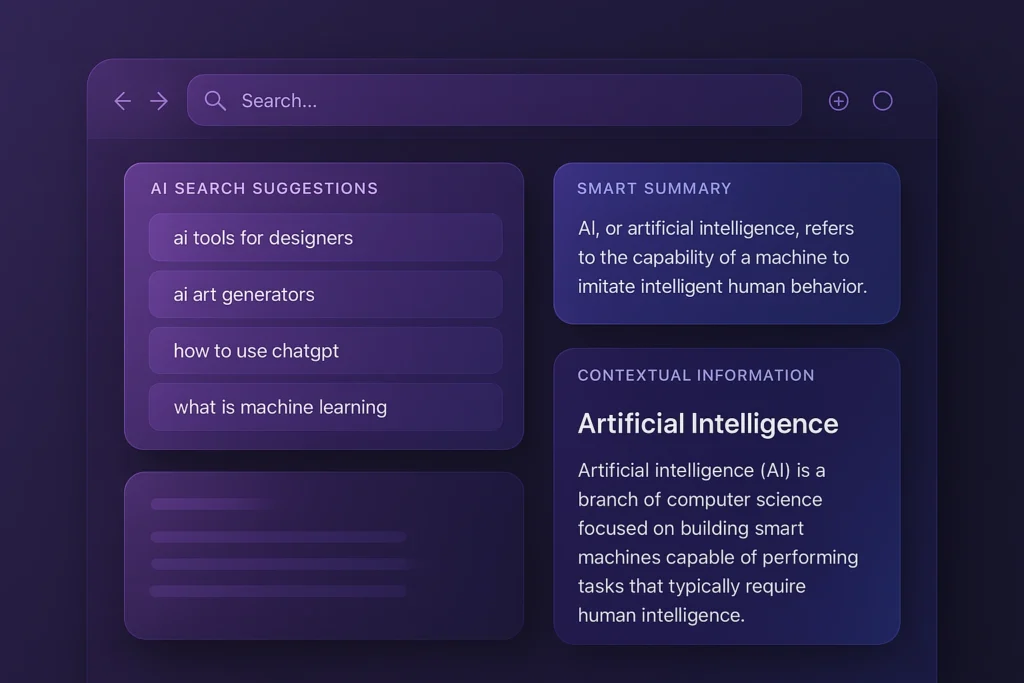
The strategic brilliance lies in how an AI search company could transform the browser itself into an intelligent interface. Rather than users having to go to a separate search engine, the browser could proactively understand what users are looking for and provide intelligent suggestions, summaries, and contextual information seamlessly integrated into their browsing experience.
B. The Browser Wars Context
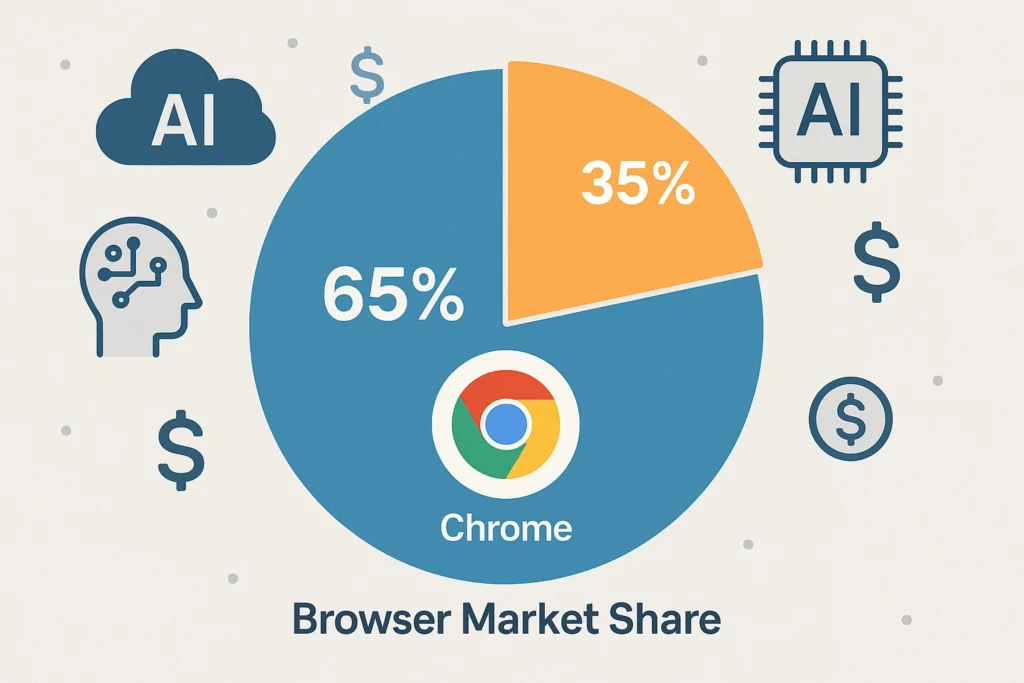
Understanding Google Chrome’s position in the current browser landscape helps explain why this acquisition target makes so much sense. Chrome’s dominance isn’t just impressive – it’s overwhelming. With over 65% market share globally, Chrome has become the de facto standard for how billions of people experience the web. This level of market penetration represents an incredibly valuable distribution channel for any company looking to deliver new technologies to users.
The browser wars of the past decade have largely been won by Chrome, leaving competitors like Safari, Edge, and Firefox fighting for much smaller slices of the market pie. What Perplexity recognizes is that owning this distribution channel could be more valuable than trying to build the best technology if that technology can’t reach users effectively.
Chrome’s dominance also comes with something even more valuable than market share – user data and behavioral insights. The browser sees everything users do online, providing unprecedented visibility into how people discover, consume, and interact with information. For an AI company focused on improving search and information discovery, this data could be absolutely transformative.
C. Competitive Advantages
The competitive advantages that would come with Chrome acquisition are almost too numerous to count. Direct access to over 3 billion users represents an immediate distribution network that most companies can only dream of achieving. Instead of spending billions on marketing and user acquisition, Perplexity would inherit an existing relationship with users who already trust and rely on Chrome for their daily internet activities.
Integration opportunities with Perplexity AI could revolutionize how people browse the web. Imagine a browser that doesn’t just display web pages, but actively helps users understand, summarize, and make sense of the information they encounter. The technical possibilities for creating a more intelligent, helpful browsing experience are virtually limitless when you combine Perplexity’s AI capabilities with Chrome’s platform.
Perhaps most importantly, this acquisition would reduce Perplexity’s dependency on existing tech ecosystems controlled by competitors. Instead of trying to work within systems designed by other companies, they’d have the freedom to innovate and experiment with entirely new approaches to how people interact with online information.
Industry Impact Analysis
A. Browser Market Disruption
The potential acquisition would send shockwaves through the entire browser ecosystem in ways that are difficult to fully predict. Competitors who have been fighting for market share against Chrome would suddenly find themselves facing an entirely different type of competitor – one focused on AI-enhanced browsing rather than traditional browser features.
This disruption could actually create new opportunities for other browser companies to differentiate themselves. If Chrome becomes primarily focused on AI-powered experiences, there might be market space for browsers that emphasize privacy, simplicity, or specialized use cases that don’t require heavy AI integration.
The ripple effects would extend beyond just browser companies to impact how web developers think about building websites and applications. If Chrome begins integrating AI-powered features that change how users discover and interact with content, developers would need to adapt their strategies accordingly.
B. Search Engine Revolution
Perhaps the most significant impact would be on the search engine landscape itself. Currently, users have to make deliberate choices about which search engine to use, but if AI-powered search becomes integrated directly into the browser experience, it could fundamentally change how people discover information online.
Traditional search engines might find themselves fighting for relevance in a world where the browser itself becomes an intelligent interface for finding and understanding information. This could accelerate the broader shift toward AI-powered information discovery that’s already beginning to reshape user expectations.
The implications extend beyond just how people search to how content creators and businesses think about reaching their audiences. If the browser becomes more intelligent about understanding and presenting content, traditional SEO strategies might need to evolve to work with AI-powered discovery mechanisms.
C. Developer and Enterprise Effects
Web developers and enterprise users would face both exciting opportunities and significant challenges if this acquisition moves forward. On the positive side, having AI capabilities built directly into the browser could enable entirely new types of web applications and user experiences that weren’t previously possible.
However, enterprises that have built their technology strategies around Chrome’s current feature set and governance model might need to reassess their approaches. Changes in how Chrome handles privacy, security, and enterprise management could require significant adjustments to existing IT strategies.
The broader developer ecosystem would also need to adapt to new possibilities and constraints that come with an AI-powered browser. This could drive innovation in web development, but it might also create compatibility challenges as the platform evolves.
Technical Integration Possibilities
A. AI-Enhanced Browsing Features
The technical possibilities for integrating Perplexity’s AI capabilities into Chrome are genuinely exciting to consider. Real-time search integration could transform browsing from a passive activity into an interactive experience where the browser actively helps users understand and discover relevant information as they browse.
Imagine highlighting text on any webpage and instantly getting contextual explanations, related information, or different perspectives on the topic. The browser could provide intelligent summaries of lengthy articles, help users fact-check information they encounter, or suggest related content that might be valuable based on what they’re currently reading.
These AI-powered features could make the web more accessible to users by automatically adapting content complexity, providing translations, or offering simplified explanations of technical topics. The browser could become a personal research assistant that helps users navigate the overwhelming amount of information available online.
B. Privacy and Security Upgrades
Enhanced user data protection could become a major selling point for an AI-powered Chrome under Perplexity’s control. Rather than simply collecting user data for advertising purposes, the browser could use AI to provide personalized experiences while keeping sensitive information secure and private.
AI-powered security features could offer real-time protection against phishing attempts, malicious websites, and other online threats by analyzing patterns and behaviors that might indicate danger. The browser could become proactively protective rather than simply reactive to known threats.
Transparent data usage policies backed by AI could give users much more control and understanding over how their information is being used. Instead of complex privacy policies that nobody reads, AI could explain in plain language what data is being collected and why, giving users meaningful choices about their privacy preferences.
Expert Opinions and Analysis
A. Industry Analyst Predictions
Success probability assessments from industry analysts are painting a complex picture of this potential acquisition. Many experts are impressed by the strategic vision while remaining skeptical about the execution challenges. The consensus seems to be that while the logic behind the acquisition is sound, the practical hurdles are enormous.
Some analysts are pointing to the regulatory environment as a major obstacle, suggesting that antitrust concerns could derail the deal even if Google were willing to sell. Others are focusing on the technical challenges of integrating AI capabilities into a browser used by billions of people without disrupting existing functionality.
The most optimistic analysts see this as a potentially transformative moment for the internet, comparing it to major platform shifts of the past. They argue that if Perplexity can successfully execute on their vision, it could accelerate the transition to AI-powered internet experiences by several years.
B. Tech Leader Commentary
CEO and founder reactions from across the tech industry have been fascinating to observe. Some leaders are publicly supportive of the bold move, praising Perplexity for thinking big and challenging established players. Others are more cautious, pointing to the risks and complexities involved in such a massive acquisition.
Several prominent figures in the AI community have expressed excitement about the potential for advancing AI integration in everyday technology. They see this as an opportunity to demonstrate how AI can enhance rather than replace existing tools and services that people rely on.
However, privacy advocates and some tech leaders have raised concerns about concentration of power in the AI space. They worry about what happens when AI capabilities become too centralized in the hands of a few major companies, even if those companies have good intentions.
Conclusion and Future Implications
The story of Perplexity’s $34.5 billion bid for Chrome is still being written, and regardless of whether this specific acquisition succeeds, it has already changed the conversation about the future of web browsing and AI integration. The bold move has demonstrated that even established tech giants aren’t immune to disruption from innovative competitors with ambitious visions.
What’s most significant about this development isn’t just the potential for one company to acquire another, but what it represents about the broader transformation happening in how people interact with information online. The line between browsing, searching, and understanding is becoming increasingly blurred as AI technologies mature and become more integrated into everyday tools.
Whether Perplexity ultimately succeeds in acquiring Google Chrome or not, this announcement has already accelerated important conversations about the future of internet experiences. It has highlighted the potential for AI to transform not just individual applications, but entire platforms and ecosystems that billions of people depend on daily.
The tech industry will be watching closely to see how this story unfolds, as it could set important precedents for how AI companies approach growth and market penetration in the coming years. One thing is certain – the conversation about the future of browsing and search will never be quite the same.