


Table of Contents
As the US economy navigates a delicate and uncertain landscape, the Federal Reserve finds itself at a critical juncture. With warnings of potential stagflation from prominent figures like JPMorgan Chase CEO Jamie Dimon, the central bank is under increasing pressure to make a decisive move on interest rates.
In this in-depth analysis, we’ll explore the insights of Simona Mocuta, the Chief Economist at State Street Global Advisors, who argues that the Fed should consider lowering policy rates this summer to safeguard the ongoing economic expansion.

A Sense of Déjà Vu: The Fed’s Hesitation to Cut Rates Last Summer
Mocuta begins by acknowledging a sense of familiarity with the current situation, noting that she made a similar argument for the Fed to cut rates last summer. However, the central bank was reluctant to follow through at the time, only to eventually implement a larger rate cut in September.
According to Mocuta, there is a “decent chance” the Fed may find itself in a similar scenario this year, with the potential for a summer rate cut followed by a more substantial reduction later in the year.
The Delicate State of the Labor Market and Economy
Mocuta’s primary argument for the Fed to consider cutting rates this summer centers around the current state of the labor market and the broader economy. She argues that the economy is in a “much more delicate” position compared to a year ago, with labor demand continuing to weaken.
While the labor market remains in balance, Mocuta believes the pressures are now tilting towards more softness, rather than a drastic deterioration. She explains that some of the economic factors that may not yet be reflected in the payroll data, such as funding cuts, could have repercussions that become more apparent in the coming months.
Balancing Inflation and Labor Market Concerns
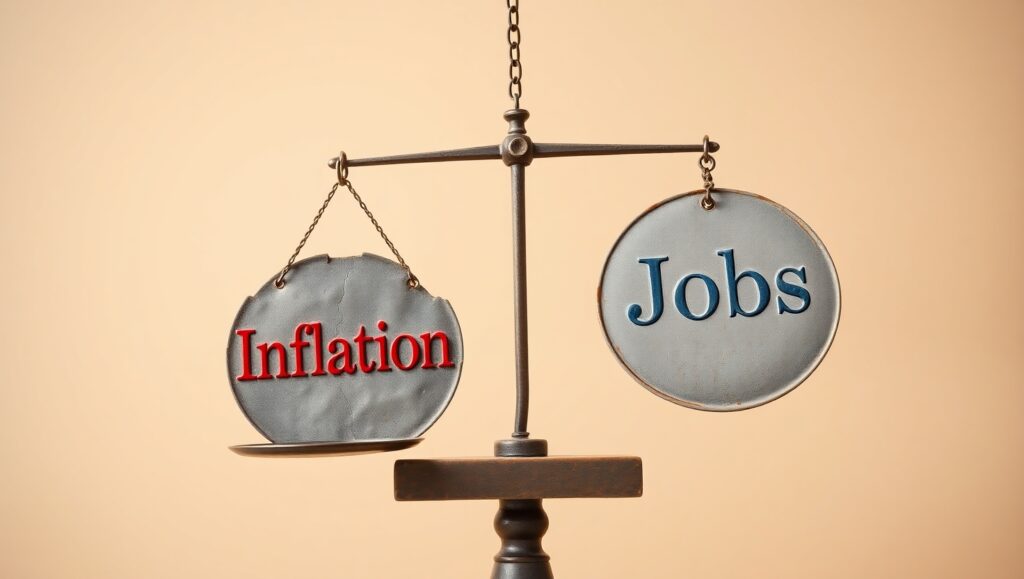
Mocuta acknowledges the Fed’s dual mandate of maintaining price stability and promoting maximum employment. She notes that the central bank’s attention is currently focused on the inflation side of the equation, but she argues that the more steady trend of softening in the labor market should be given greater consideration.
The economist emphasizes the critical importance of a strong labor market, as it is the foundation for maintaining robust consumer spending and avoiding a recession. She believes the Fed should manage both the inflation and labor market risks, potentially accepting a modest impact on inflation from factors like tariffs in order to preserve the overall economic expansion.

The Fiscal Sustainability Challenge and Its Impact on the Economy
Mocuta also addresses the rising 30-year Treasury yields, which have recently ticked above 5%. She sees this as a clear indication of a fiscal sustainability challenge that needs to be addressed, but cautions against a sudden and drastic approach.
The economist argues that a sustained high level of long-term interest rates would significantly dampen the economy’s ability to grow, and she hopes that policymakers will pursue a more growth-oriented agenda, potentially through deregulation and other measures.
Interestingly, Mocuta suggests that the higher long-term yields may actually create an opening for the Fed to offer some relief, as the market is “doing a little bit of the lifting” for the central bank. However, she acknowledges the challenge posed by the ongoing uncertainty surrounding trade policies and tariffs.
The Risks of Cutting Rates Too Soon
Mocuta addresses the concerns around the Fed cutting rates too soon, without the presence of a more pronounced and sustained trend of economic weakness. She points to a chart that compares the Fed funds rate to nominal GDP growth, noting that the two are currently “pretty much on top of each other.”
This, she explains, indicates that the cost of capital (represented by the Fed funds rate) is not substantially below the return on capital (represented by nominal GDP growth), suggesting a lack of incentive for investment. Mocuta argues that this level of tightness has typically preceded recessions in the past, and she believes the current economic environment is “a delicate moment” that requires careful consideration.
Mocuta’s Advice for the Federal Reserve
Despite the complexities involved, Mocuta’s advice to the Federal Reserve is clear: “You should not be afraid to cut.” She acknowledges the need to balance inflation concerns, but argues that a little higher-than-target inflation without a recession is preferable to precisely on-target inflation accompanied by a recession.
Mocuta suggests that the Fed should “calibrate policy rates lower,” with her expectation of 75 basis points worth of cuts this year, whether they happen in small increments or a more substantial 50-basis-point move at some point. She believes the risks are skewing in the direction of rate cuts, and that the central bank should act accordingly to preserve the ongoing economic expansion.

Implications for Investors and the Broader Economy
Mocuta’s analysis has significant implications for investors and the broader economy. If the Fed heeds her advice and implements rate cuts this summer, it could provide a boost to financial markets and consumer confidence, potentially offsetting some of the headwinds facing the economy.
However, the central bank’s decision-making process will also be influenced by other factors, such as the ongoing trade negotiations, geopolitical tensions, and the evolution of inflation data. Investors and businesses will need to closely monitor the Fed’s actions and statements to gauge the potential impact on their investment strategies and economic planning.
Conclusion: A Delicate Balancing Act for the Federal Reserve
As the US economy navigates a complex and uncertain landscape, the Federal Reserve finds itself in a delicate balancing act. Simona Mocuta’s analysis highlights the need for the central bank to consider the broader economic implications, including the state of the labor market and the potential risks of a recession, when making its policy decisions.
While the Fed must remain vigilant in its pursuit of price stability, Mocuta’s argument for a summer rate cut suggests that the central bank should not hesitate to act in order to preserve the ongoing economic expansion. As the debate continues, investors, businesses, and policymakers will closely monitor the Fed’s actions and their impact on the broader economic landscape.