


Table of Contents
Introduction: Overview of Berkshire Hathaway’s Recent Financial Moves
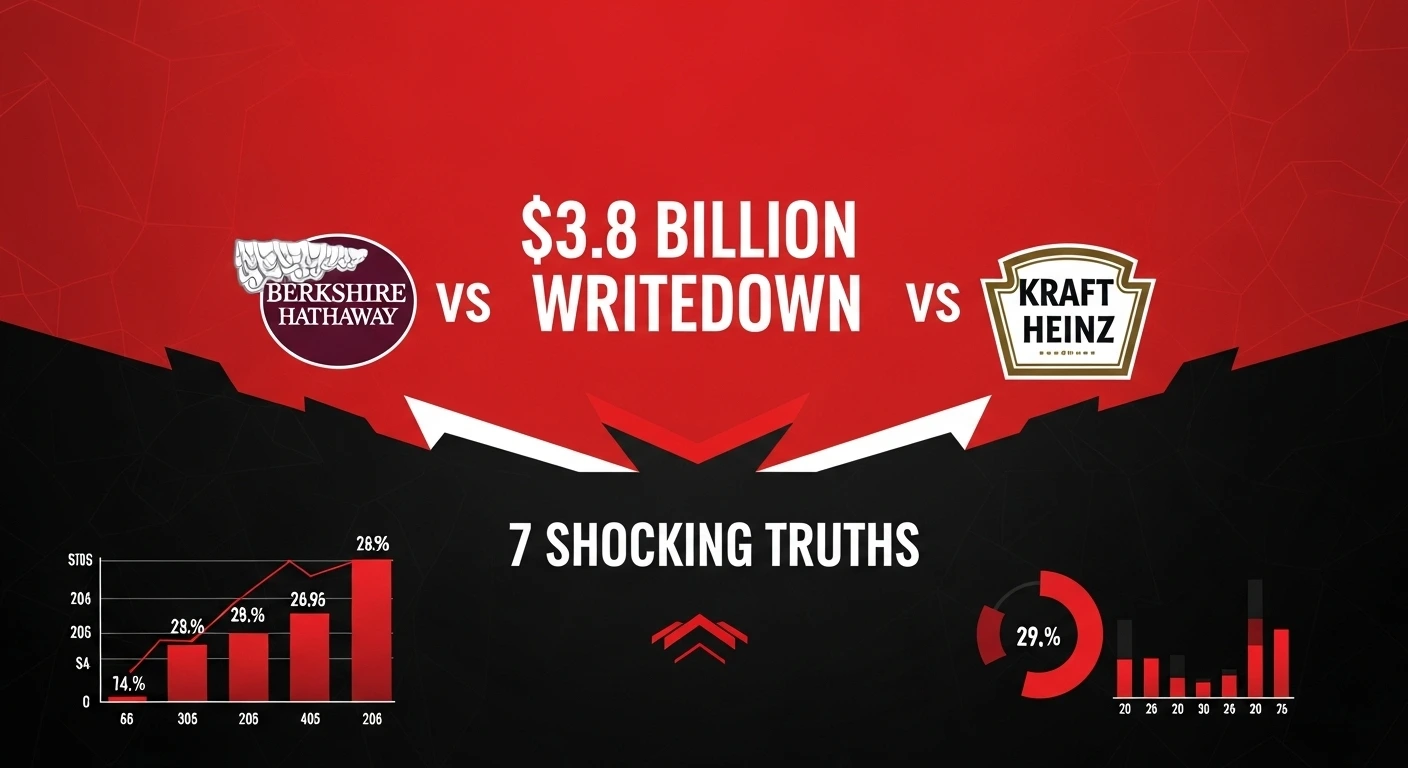
Warren Buffett’s Berkshire Hathaway has long been considered one of the most successful investment companies in the world. However, even the Oracle of Omaha isn’t immune to significant financial setbacks. The company’s recent $3.8 billion writedown on its Kraft Heinz investment has sent shockwaves through the financial community, revealing important insights about corporate investment strategies and market realities.
This massive writedown represents one of the most significant financial adjustments in Berkshire’s recent history. The decision reflects the challenging market conditions and operational difficulties that have plagued the food giant since the Buffett Kraft Heinz deal was first announced. Understanding the implications of this writedown provides valuable lessons for investors and offers a glimpse into how even the most experienced investment firms navigate complex market challenges.

The Reasons Behind the $3.8 Billion Writedown on Kraft Heinz
The substantial writedown didn’t happen overnight. Several factors contributed to this dramatic financial adjustment, painting a picture of an investment that faced more headwinds than initially anticipated.
Market Valuation Challenges
The food industry has experienced significant disruption in recent years. Consumer preferences have shifted toward healthier, more natural products, leaving traditional packaged food companies struggling to maintain their market position. Kraft Heinz found itself particularly vulnerable to these changing dynamics, with many of its flagship brands losing market share to smaller, more agile competitors.
Operational Difficulties
Beyond market challenges, Kraft Heinz has faced internal operational issues that have impacted its financial performance. The company’s aggressive cost-cutting measures, while initially successful in improving margins, eventually began to affect product quality and brand reputation. This approach proved unsustainable in the long term, contributing to the Kraft Heinz loss that necessitated the writedown.
Regulatory and Competitive Pressures
The food industry has also faced increased regulatory scrutiny regarding health claims and ingredient transparency. These changes required significant investments in product reformulation and marketing, further straining the company’s financial resources and contributing to the Kraft Heinz impairment.

How the Writedown Affects Berkshire Hathaway’s Overall Financial Health
Despite the significant size of the writedown, Berkshire Hathaway’s overall financial position remains robust. The company’s diversified portfolio and strong cash reserves provide substantial cushion against individual investment losses.
Balance Sheet Impact
The $3.8 billion writedown represents a notable adjustment to Berkshire’s balance sheet, but it doesn’t fundamentally alter the company’s financial stability. Berkshire Hathaway profits from other investments and operating businesses continue to provide strong cash flow, offsetting much of the impact from the Kraft Heinz adjustment.
Shareholder Confidence
While any significant writedown raises questions among shareholders, Berkshire’s long track record of successful investments helps maintain investor confidence. The company’s transparent approach to reporting both successes and failures demonstrates the integrity that has made it a trusted investment vehicle for decades.
Portfolio Diversification Benefits
This situation highlights the importance of Berkshire’s diversified investment approach. The company’s holdings span multiple industries and investment types, ensuring that challenges in one area don’t significantly impact overall performance.

A Closer Look at the Decline in Operating Profit for Berkshire Hathaway
The Kraft Heinz writedown is part of a broader story about operating profit impact across Berkshire’s portfolio. Understanding these trends provides insight into the company’s current financial dynamics.
Berkshire Quarterly Earnings Analysis
Recent quarterly reports have shown mixed results across Berkshire’s various business segments. While some operating companies have performed exceptionally well, others have faced headwinds similar to those experienced by Kraft Heinz. The operating profit impact from the food industry investment serves as a reminder of the cyclical nature of many business sectors.
Cash Flow Considerations
Despite the writedown, Berkshire’s operating companies continue to generate substantial cash flow. This operational strength provides the foundation for future investment opportunities and demonstrates the resilience of the company’s business model.
Long-term Perspective
Berkshire’s management has consistently emphasized the importance of taking a long-term view when evaluating investment performance. The Kraft Heinz writedown, while significant, represents one data point in a much larger investment timeline.
The Broader Impact on Investors and Market Perception
The Kraft Heinz writedown has implications that extend beyond Berkshire Hathaway itself, influencing broader market perceptions and investment strategies.
Industry-Wide Effects
The challenges faced by Kraft Heinz reflect broader trends affecting the traditional food industry. Other companies in similar positions have also experienced valuation pressures, suggesting that this isn’t an isolated incident but rather part of a sector-wide transformation.
Investment Strategy Lessons
The situation provides valuable lessons about the importance of adapting investment strategies to changing market conditions. Even experienced investors like Warren Buffett must continuously reassess their positions and make difficult decisions when circumstances change.
Market Reaction and Volatility
Financial markets have responded to the writedown with typical volatility, but the overall reaction has been relatively measured. This suggests that investors understand the isolated nature of this particular challenge and continue to have confidence in Berkshire’s overall investment approach.

Lessons Learned and Future Outlook for Berkshire and Kraft Heinz
Every significant investment challenge provides learning opportunities, and the Kraft Heinz situation is no exception.
Adaptation Strategies
Both companies are actively working to address the underlying issues that contributed to the writedown. For Kraft Heinz, this means investing in brand revitalization and product innovation. For Berkshire, it reinforces the importance of thorough due diligence and ongoing monitoring of portfolio companies.
Market Evolution Response
The food industry continues to evolve, with consumers increasingly demanding transparency, health benefits, and sustainability. Companies that successfully adapt to these trends will likely outperform those that resist change.
Investment Philosophy Refinement
While Berkshire’s core investment philosophy remains unchanged, the Kraft Heinz experience has likely influenced how the company evaluates similar opportunities. This evolution in approach demonstrates the continuous learning that characterizes successful long-term investors.
Conclusion: Navigating Financial Challenges with Strategic Investments
The $3.8 billion Kraft Heinz writedown represents a significant financial event, but it also demonstrates the resilience and transparency that have made Berkshire Hathaway a respected investment company. By acknowledging challenges openly and taking appropriate action, the company continues to demonstrate the integrity that has earned investor trust over decades.
This situation serves as a reminder that even the most successful investors face setbacks. The key lies not in avoiding all losses, but in managing risk appropriately and learning from each experience. As both Berkshire and Kraft Heinz move forward, the lessons learned from this challenging period will likely contribute to stronger decision-making and better outcomes in the future.
For investors, the Kraft Heinz writedown offers valuable insights into the importance of diversification, the need for continuous monitoring of investments, and the reality that market conditions can change rapidly. By understanding these dynamics, individual investors can better prepare their own portfolios for similar challenges.
FAQ
Q: What exactly is a writedown, and why did Berkshire Hathaway need to take one on Kraft Heinz?
A: A writedown occurs when a company reduces the book value of an asset because its market value has fallen below its recorded value. Berkshire took this writedown because Kraft Heinz’s actual market value had declined significantly below what Berkshire had originally paid for its stake.
Q: How does this writedown affect Berkshire Hathaway shareholders?
A: While the writedown reduces Berkshire’s book value, it doesn’t necessarily impact the company’s ability to generate future returns. Berkshire’s diversified portfolio and strong cash flow from operating businesses help offset this impact.
Q: Is this writedown a sign that Warren Buffett’s investment strategy is failing?
A: Not necessarily. Even the most successful investors experience setbacks. Buffett’s long-term track record remains exceptional, and one challenging investment doesn’t invalidate his overall approach.
Q: What factors contributed to Kraft Heinz’s declining value?
A: Multiple factors including changing consumer preferences, increased competition, operational challenges, and industry-wide pressures all contributed to the company’s valuation decline.
Q: Will Berkshire Hathaway sell its remaining Kraft Heinz shares?
A: Berkshire’s management hasn’t indicated any immediate plans to sell. The company typically takes a long-term approach to investments and may choose to hold the position while Kraft Heinz works through its challenges.
Q: How common are writedowns of this size for major investment companies?
A: While $3.8 billion is substantial, writedowns are a normal part of investment management, especially for companies with large, diverse portfolios. The key is how well the overall portfolio performs over time.
Q: What can individual investors learn from this situation?
A: The importance of diversification, thorough research, ongoing monitoring of investments, and maintaining a long-term perspective when market conditions become challenging.