


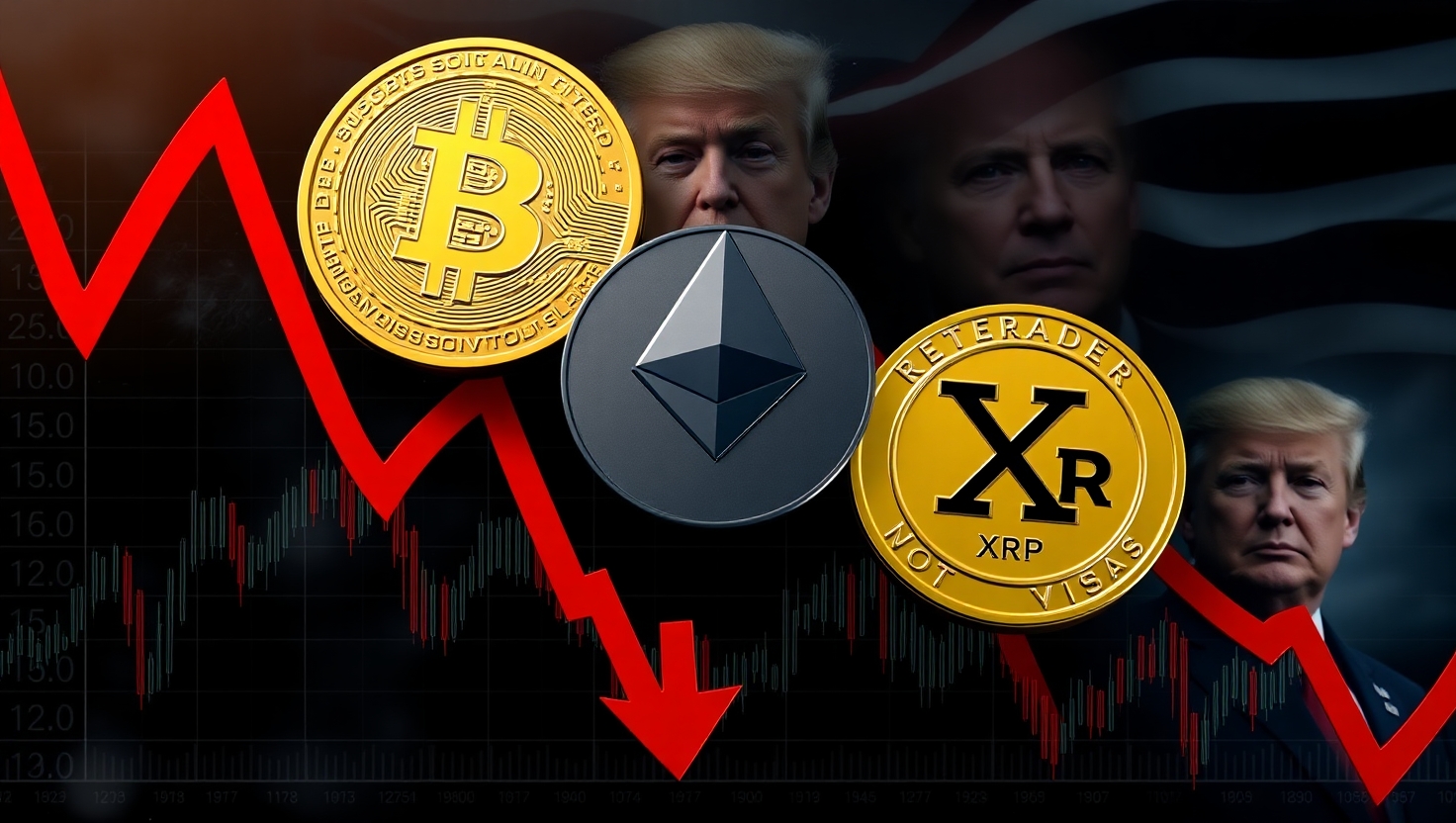
A Harsh Weekend for Crypto Investors
Bitcoin’s wild 2025 ride took a sharp downturn this weekend as the leading cryptocurrency fell below the psychological $77,000 barrier, its lowest level in months. According to data from Coin Metrics, Bitcoin is now trading at $76,221, a more than 4% drop in just 72 hours. The broader crypto market followed suit, with Ethereum and Solana suffering even steeper losses.
What triggered the sudden sell-off? A potent mix of geopolitical uncertainty, escalating fears of a global recession, and the fallout from U.S. President Donald Trump’s recently announced global tariffs has rocked risk assets across the board — and cryptocurrencies weren’t spared.

U.S. Tariffs Spark Fears of Recession
The market downturn was set in motion last week following Trump’s announcement of sweeping protectionist tariffs on all U.S. imports, including aggressive duties targeting major trading partners such as China, Canada, and the European Union. Investors reacted swiftly, bracing for the potential economic impact of an all-out trade war.
The tariffs, framed by the White House as a step toward protecting American industry and jobs, have triggered fears of retaliation, decreased global trade, and an eventual contraction in economic activity. These fears intensified over the weekend and spilled into Monday, leading to massive losses in both traditional financial markets and digital assets.
In just two trading sessions after the tariffs were made public, global equity markets wiped out an estimated $7.46 trillion in value, according to data from the S&P Dow Jones Indices. The U.S. market alone accounted for $5.87 trillion in lost value, while international markets added another $1.59 trillion in red ink.

Bitcoin Tumbles as Crypto Market Correlates with Equities
Historically viewed by some as a hedge against traditional finance volatility, Bitcoin has not behaved as a safe haven in this instance. Instead, it mirrored the global equities sell-off, confirming that in times of macroeconomic stress, Bitcoin behaves more like a high-risk asset than digital gold.
The correlation between Bitcoin and traditional markets has grown tighter in 2025, partly due to increasing institutional adoption. As large financial firms have added Bitcoin to their portfolios, it has become more exposed to global economic developments, macro risk factors, and investor sentiment shifts.
Geoff Kendrick, Standard Chartered’s Head of Digital Assets Research, captured the current mood, saying in an email on Sunday, “There is a lot of noise at the moment.” The chaos, according to Kendrick, is driven not only by fear of economic recession but also by confusion and inconsistency in policy messaging.
The Broader Crypto Market Suffers: Ethereum, Solana, and Others Dive
Bitcoin wasn’t the only digital asset caught in the storm. Ethereum (ETH), the second-largest cryptocurrency by market capitalization, took a deeper hit — dropping roughly 8% in the past 24 hours. Solana (SOL), known for its fast transactions and growing DeFi ecosystem, fell 6%, adding to recent downward pressure.
Ethereum’s challenges go beyond just being a digital currency. It powers an entire blockchain ecosystem including NFTs, smart contracts, and DeFi platforms. That exposure means any disruption in investor sentiment or capital markets — like the uncertainty brought on by the tariffs — can reverberate through the Ethereum blockchain’s growth and future utility.
Solana, which has built a reputation as a fast and scalable Ethereum alternative, has also suffered as developers slow down new deployments and investors retreat from high-risk, early-stage blockchain projects.

XRP: A Surprising Outlier
One notable exception to the crypto-wide sell-off is XRP, which has managed to stay relatively stable. Since February, XRP is up by about 2%, and that’s in stark contrast to the double-digit losses seen by Bitcoin and Ethereum.
The resilience of XRP could be tied to its utility in cross-border payments. As countries seek new trade alliances in light of tariffs and trade restrictions, there’s a growing need for fast, low-cost global payment solutions, an area where Ripple’s XRP Ledger excels.
Optimists point out that XRP is “tariff-proof” to some extent, as it facilitates international money transfers regardless of import/export disruptions. Whether this trend continues remains to be seen, but for now, XRP is showing relative strength in a sea of red.
Could Bitcoin Still Become a Tariff Hedge?
While Bitcoin is currently moving in tandem with traditional risk assets, some analysts believe this could change. The argument is that as fiat currencies and central banks come under stress due to isolationist trade policies, decentralized assets like Bitcoin could eventually be seen as a safer alternative.
“U.S. isolationism is similar to heightened risks of holding fiat, which will ultimately be good for Bitcoin,” said one analyst.
This scenario depends heavily on whether investors start viewing Bitcoin as a store of value independent of political influence, akin to gold. But until the market regains some sense of direction, it’s clear that uncertainty is in the driver’s seat, and Bitcoin isn’t immune to it.
Ethereum’s Long-Term Vision at Risk
Ethereum’s decline has been more severe and troubling from a developmental standpoint. Down more than 20% since February 1, Ethereum has seen a wave of risk aversion hit its ecosystem of developers, startups, and dApps.
With capital harder to raise and fewer developers willing to commit in such volatile conditions, the Ethereum network’s role as the foundation for DeFi and Web3 could see a temporary stagnation. That’s especially disappointing given the Trump administration’s vocal support for decentralized finance, with even Trump himself reportedly interested in Ethereum-based financial systems.
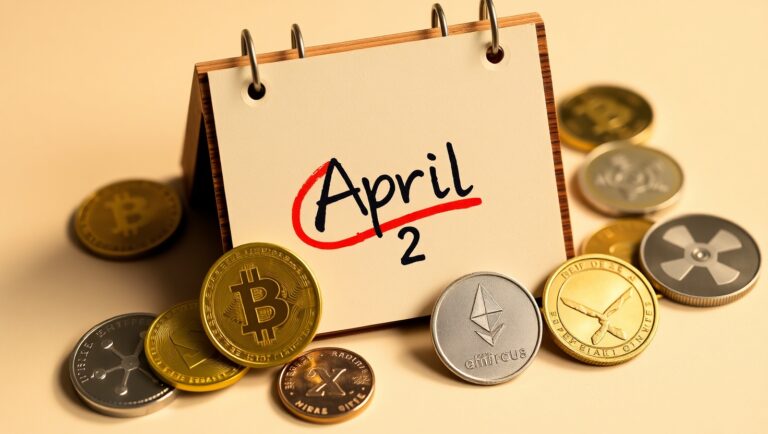
April 2: The Next Major Milestone for Crypto Markets
Investors in crypto and equities alike are eyeing April 2 with bated breath. Dubbed “Liberation Day”, it’s the day when reciprocal tariffs are expected to kick in across several key U.S. trade partners.
What the Trump administration decides to do on this date could set the tone for the global markets for the rest of the year. A harsh tariff regime could trigger additional market panic, while a more measured approach could help soothe investor nerves and stabilize risk assets — including cryptocurrencies.
Market Sentiment: FUD Dominates 2025
So far, 2025 has been a rough year for the crypto market. Despite early signs of institutional interest and regulatory clarity in some regions, global macro events continue to drive investor behavior.
The dominant theme has been FUD — fear, uncertainty, and doubt — and this sentiment has pushed even long-term crypto investors to reduce exposure or exit positions. Since the start of the year, Bitcoin is down 15%, Ethereum is down 20%, and broader altcoin markets are in worse shape.
What Happens Next?
For now, volatility is expected to remain high. Crypto traders and long-term holders will be watching not only the U.S. political landscape but also global trade developments, inflation trends, and central bank responses.
Until clarity emerges — especially regarding tariffs and global recession risk — digital assets are likely to remain under pressure. However, if history is any guide, these drawdowns also represent buying opportunities for those with conviction in the long-term potential of blockchain technology.
Final Takeaway: Uncertain Times, Long-Term Opportunity?
Despite the current volatility and gloomy headlines, many crypto enthusiasts remain optimistic. The fundamental premise of blockchain technology remains sound, and the use cases for decentralized assets continue to grow. Still, the short-term outlook will depend heavily on how macroeconomic conditions evolve.
Investors should prepare for a bumpy ride in the weeks ahead but keep an eye on April 2 — a date that could redefine crypto’s role in the financial landscape of 2025 and beyond.